

How to Survive a Long-Distance Relationship: Honest Advice for UK Couples
Quick answer: If you're searching for how to survive a long-distance relationship in the UK, here's the honest version — it's the Sunday night after a visit, you've just watched their train disappear from the platform, and your phone feels unbearably quiet. That feeling doesn't mean you're failing. It means you need specific habits, not vague advice. Here's what actually helps.
Maybe you're a student who moved from Manchester to London for uni (about 2.5 hours on the train — doable for monthly visits, if the fares cooperate). Maybe one of you took a job up in Edinburgh while the other stayed in Bristol. Maybe you met someone brilliant and the timing meant the geography just didn't line up. Whatever brought you here, you're not alone.

Why Long-Distance Relationships Fail — and How to Survive a Long-Distance Relationship in the UK Instead
Most long-distance relationships don't fall apart because of the distance itself. They fall apart because of what the distance quietly does over time. Picture it: you stop texting the small stuff because it feels like effort, the calls get rescheduled once, then twice, then you realise you haven't properly talked in ten days.
The fix isn't more grand gestures. It's consistency. Small, reliable touchpoints that say I'm still here, still thinking of you — every day, not just on anniversaries or when things feel rocky. A 2013 study by researchers at Cornell University found that long-distance couples reported higher relationship quality than geographically close ones — but only when they maintained idealisation and intentional communication. The distance itself wasn't the threat. Drifting was.
The couples who thrive long-distance aren't the ones who call for three hours every night. They're the ones who show up, in small ways, without being asked.
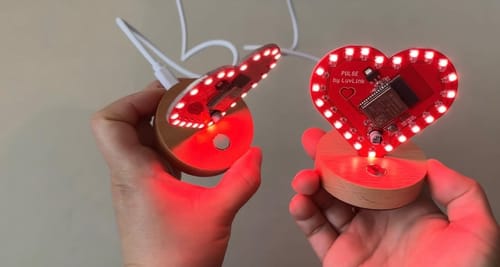
“I wish these existed when I was younger many years ago. My first love was a long distance relationship and there were a lot of challenges we faced due to the distance between us. These are great communication devices that let the other person know you’re thinking of them. You just have to download the app, you can create a group, codes, colours and animations. There’s a single or pair option. The pair are individually packaged in separate boxes and come with a UsB-C charger cord each so that y...”
How to Survive a Long-Distance Relationship: Tips That Actually Work
1. Agree on how you'll communicate — and stick to it
One of the quickest ways to breed anxiety in an LDR is having no shared expectations around contact. You don't need to be on the phone constantly, but you do need a rhythm you both understand. A morning voice note, a lunchtime text check-in, a proper video call every few nights — whatever suits your schedules. The key is that it's agreed, so neither of you is left wondering why things have gone quiet.
For UK couples with a partner in Europe, this is actually easier than it sounds. Paris, Amsterdam, and Berlin are only one or two hours ahead — close enough that a 9pm call lands at a reasonable time for both of you, unlike couples managing a US or Australian time difference.
2. Create rituals, not just catch-up calls
There's a difference between a call where you recap your week and one where you actually do something together. Watch the same film simultaneously. Cook the same recipe at the same time and eat dinner "together" over video. Do the Sunday crossword on a shared doc. These rituals give you things to look forward to — and shared experiences to talk about, which matters more than it sounds.
3. Send something physical
There is something about a physical object — a letter, a parcel, a gift — that a text message simply cannot replicate. It says: I thought of you enough to make this happen in the physical world. Sending something tangible is one of the most underrated tools in an LDR toolkit.
This is exactly why couples use the LuvLink Friendship Lamp. You each keep one — wherever you are in the UK or the world — and when you touch yours, theirs lights up in the same colour. No message needed. No waiting for them to be free. Just a quiet, instant signal that says I'm thinking of you right now. It sounds simple because it is simple, and that simplicity is the whole point.

4. Talk about the future — concretely
Long-distance is a lot easier to endure when it feels temporary. Not in a vague "we'll figure it out eventually" way, but with actual conversations: when might this change? What are we working towards? The distance is hard precisely because the relationship matters — so treat the end-goal as a real thing to plan for, not a fuzzy comfort you pull out during arguments.
5. Don't save everything for the big calls
If you only reach out when you have something significant to say, you'll start to feel like strangers having occasional formal updates. Send the stupid meme. Text the weird thing you saw on the Tube. Sending a photo of a terrible meal you made is not nothing — it's actually what you'd have texted them if you lived together. That's the whole point.

The Reality of Long-Distance in the UK
One thing almost every UK long-distance couple has in common: the visits cost more than expected. A last-minute London to Edinburgh return on Avanti or LNER can run well over £100, and that's before accommodation. It's worth building visit costs into a shared budget early — treating it like a subscription you both pay into, not an expense that catches you off guard every time.
The good news is that UK distances are genuinely manageable. Manchester to London is roughly 2.5 hours. Leeds to Bristol is around 3 hours. Even Edinburgh to London is 4.5 hours on the train. These aren't transatlantic gaps — they're distances where monthly visits are realistic if you plan in advance and book early. The couples who struggle most with UK LDRs tend to be the ones who never nail down the next visit, leaving the relationship in a permanent state of "we'll figure it out."
Making an LDR Work Day to Day: A Quick Checklist
None of these are complicated. All of them require showing up consistently:
- A daily touchpoint — even if it's just a voice note or a "thinking of you" lamp glow
- A regular proper call — scheduled, not just "whenever we can"
- Shared something — a series you're both watching, a book club for two, a playlist
- A physical connection — letters, parcels, or a connected lamp that closes the gap
- An honest conversation about hard feelings — jealousy, loneliness, and frustration don't go away by being ignored
- Something to look forward to — the next visit, always planned, even if it's months away
When Long-Distance Starts to Feel Like Too Much
There will be hard weeks. Weeks when the distance feels less like a temporary inconvenience and more like a wall. That's not a sign that your relationship is failing — it's a sign that you're human and that you genuinely care.
During those stretches, go back to basics. Reach out more, not less. Use the silly small gestures. Light the lamp. Send the voice note you weren't sure was too much. Pulling back and hoping the feeling passes on its own almost never works — what works is making yourself present in a small, low-pressure way until the closeness comes back.

If you want a deeper look at the practical tools that help, our guide on how to stay connected in a long-distance relationship covers even more ground.
The LuvLink Friendship Lamp: Set Options
The Friendship Lamp connects over Wi-Fi — touch yours, and every lamp in your group lights up instantly in your chosen colour, wherever they are. You can cycle through over 150 colours, so you can build your own quiet language: green for good morning, yellow for missing you, red for "call me when you can." Couples, families, and close friends all use it, and the system stays useful years in.
| Set Option | Best For |
|---|---|
| Set of Two | Couples or best friends living apart — the most popular starting point |
| Single Lamp | Adding to an existing set, or gifting to someone who already has one |
Sets of Three, Four, Five, and Six are also available for families or friend groups — see all set options here.
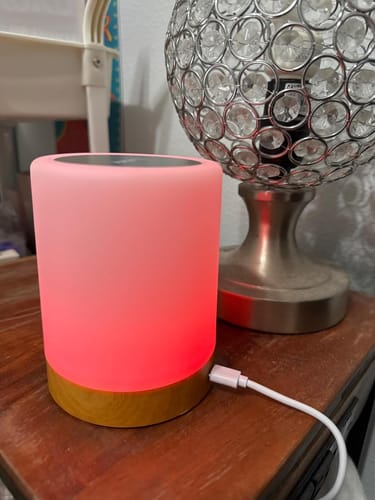
“My best friend and I are long distance, so for Christmas I’ve decided to get us these lamps to let us know that we’re still thinking of each other despite being thousands of miles apart! these lamps have so many different settings, and is the perfect present for those who cherish thoughtful gifts, and a minimalistic vibe.”
Frequently Asked Questions
How often should long-distance couples communicate?
There's no single right answer, but most couples find that a brief daily touchpoint (a message, a voice note, or even a lamp glow) plus a proper video call every few days works well. The important thing is that you both agree on the rhythm so no one is left guessing.
Do long-distance relationships actually work for UK couples?
Yes — plenty of couples successfully maintain long-distance relationships between UK cities or between the UK and abroad. The distances involved (London to Manchester, Edinburgh to Birmingham, UK to Europe) are very manageable with consistent communication and planned visits. Book trains in advance to keep costs down, and always have a next visit on the calendar. The main ingredient is genuine commitment from both sides.
What is a Friendship Lamp and can it really help a long-distance relationship?
A Friendship Lamp is a Wi-Fi connected lamp that links to your partner's lamp. When you touch yours, theirs lights up — instantly, wherever they are. It gives you a way to say "I'm thinking of you" that doesn't require them to be on their phone or available to talk. Couples who use them often say the lamp becomes a quiet, comforting presence — a reminder that someone out there is thinking of them, even on the ordinary Tuesday evenings that are somehow the hardest.
What's the hardest part of a long-distance relationship, and how do you handle it?
Most people say the hardest part isn't the big milestones missed — it's the everyday ordinariness they don't get to share. Coming home to an empty flat, having something funny happen and no one to tell in person. The best way to handle it is to build small daily habits that replicate that feeling of togetherness: sharing the mundane over text, keeping a lamp that glows when they're thinking of you, and making sure your next visit is always on the calendar.


