

10 Signs Your Long-Distance Relationship Is Actually Thriving
Quick answer: A long-distance relationship is genuinely thriving when both people feel secure, communicate openly, have a shared plan for the future, and find real ways to feel close — not just when they happen to be having a good week. A 2023 study in the Journal of Communication found that LDR couples report similar or even higher relationship satisfaction than geographically close couples. Hard, yes. Broken? That's a different thing entirely.
Long distance is hard. Nobody's pretending otherwise. But "hard" and "not working" are two very different things — and plenty of couples mistake the difficulty of being apart for evidence that something's broken. If you've been searching for signs your long-distance relationship is working, you're not alone — it's one of the most common questions UK couples ask. Here are ten honest green flags to look for.
1. You Don't Spiral When They Don't Reply Immediately
This one sounds small. It isn't. Secure couples in healthy LDRs know that a two-hour gap in messages usually means their partner is busy, not drifting away. If you can see an unread message and think "they'll get back to me" rather than "something's wrong," that's real trust — the kind that only comes from consistent, honest communication over time.

“The LuvLink Friendship Lamp is the perfect gift for anyone who’s in a relationship with distance and for any loved one such as family or best friend to stay connected. It was very easy to set up, the colors are amazing, not much assembly required. It’s worth the value because it provides a way to light up any day you’re feeling down when you see a color change from your family, friend, or partner. I would definitely recommend to my friends and family.”
2. Your Communication Has a Rhythm (Not Just a Quantity)
It's not about how many times a day you text. Couples who thrive long-distance tend to have a natural rhythm — maybe a morning voice note, a proper call a few evenings a week, and the odd spontaneous check-in. They're not glued to their phones out of anxiety; they connect because they genuinely want to, and they've found a pattern that works for both of them.
According to Ofcom research, phone and video calls remain the top connection method for UK couples living apart — more than messaging apps or social media. There's something about hearing someone's actual voice that texts just can't replicate.
Consistent doesn't mean constant. A good rhythm respects both people's lives — and actually makes the moments of connection feel more meaningful.
3. You Have a Real Plan for "The End Goal"
This is probably the single biggest green flag in any long-distance relationship. If you both know — roughly, honestly — what you're working towards and when, the distance has a purpose. It doesn't have to be a precise date circled on a calendar. It just has to be a shared direction. Two people moving towards the same future feel far less alone than two people who've never had the conversation.
If you haven't had that conversation yet, this honest guide to surviving long-distance relationships is a good place to start.
4. You're Still Growing as Individuals
Thriving LDR couples don't put their lives on hold. They pick up new hobbies, see friends, progress in their careers — and then bring all of that back to the relationship.
Think of the couple where she started pottery classes in Manchester while he finally finished the half-marathon training plan he'd been putting off for two years in Bristol. They had more to talk about. They came back to each other as fuller versions of themselves. The distance, as painful as it is, often gives people space to do exactly that.
If both of you are genuinely living your lives rather than just counting down days, you're probably in better shape than you think. That's not a consolation prize — it's the relationship doing its job.
5. Visits Feel Like a Continuation, Not a Reset
When you reunite, does it feel like you're picking up exactly where you left off? Or does it take a day or two of awkward adjustment before you feel like yourselves again? Couples who stay genuinely connected between visits tend to slip back into each other's company naturally. The time together feels like more of the same relationship — just in person — rather than a frantic attempt to make up for lost time.
This is particularly telling for UK couples managing long routes like London to Edinburgh or Birmingham to Glasgow. When a four-hour journey feels worth it the moment you're through the door, something's working.
6. You've Found Ways to Feel Close Between Visits — Signs Your Long-Distance Relationship Is Working in the UK
The couples who really make long distance work are usually the ones who've been creative about staying connected day-to-day — not just during calls. This might look like watching the same TV series and texting reactions in real time, sending voice notes instead of typed messages, or using something physical in the home to bridge the gap.
One of the most quietly powerful tools for this is a Friendship Lamp — a pair of Wi-Fi connected lamps that you and your partner each keep at home. Touch yours, and theirs lights up in the same colour. No words needed; just a small, warm signal that says "I'm thinking of you." Thousands of UK couples use them precisely because the connection feels physical and real, even across hundreds of miles. They come in sets of two up to six — handy if you want to loop in a parent or a flatmate too. You can read about how other UK couples and families use them here.
7. You Handle Conflict Without It Becoming a Crisis
Every couple argues. The question is what happens after. In a thriving long-distance relationship, disagreements don't automatically become catastrophic threats to the whole relationship. Both people can sit with discomfort, return to the conversation when they're calmer, and actually resolve things — rather than letting tension fester over days of cold, one-word messages. If you can disagree and come back to each other, that's a genuinely good sign.
Conflict handled well is actually evidence of closeness — it means both people care enough to work it out.
8. You Talk About the Future in the First Person Plural
"When we move to the same city…" "When we get a flat together…" "We should go there someday…" — little linguistic signals like these matter more than they might seem. Couples who naturally include each other in their future plans, without making a big deal of it, are usually the ones who end up actually being in each other's futures. It's a quiet form of commitment that shows up long before any formal conversation.
9. You Feel Genuinely Supported From a Distance
A good partner doesn't have to be in the same postcode to be present.
If your person remembers that you had a difficult meeting on Tuesday and asks how it went — if they check in when you're stressed, if they celebrate your wins even from three hundred miles away — that's not small. Emotional presence is something you either feel or you don't.
One UK couple described it to us like this: she'd just had a brutal performance review at work in Leeds. He was in London. He didn't fix it. He just called, listened for forty minutes, and ordered her a takeaway to her door. That's it. That's the thing. If you feel that kind of presence consistently, your relationship is in better shape than most.
Staying connected in small, consistent ways is one of the best things you can do for an LDR — this guide on staying connected in a long-distance relationship has some genuinely practical ideas worth bookmarking.
10. The Distance Is Hard — But It Doesn't Feel Hopeless
Long distance is supposed to feel hard sometimes. Missing someone you love is not a relationship problem — it's just what love feels like at a distance.
The real green flag is when the difficulty coexists with hope. You can have a rubbish week apart, feel genuinely lonely on a Friday night, and still be certain — bone-certain — that the relationship is worth every mile of it.
One couple we spoke to described it as feeling homesick for a person who's still very much yours. That's not a red flag. That's just love with mileage on it.
How a Friendship Lamp Can Help Bridge the Gap
If you're ticking most of the boxes above but still looking for a more tangible way to feel close on the days between calls, a Friendship Lamp is worth looking at. They come in sets of two, three, four, five, or six — so they work just as well for close friends or family members as they do for couples. One touch sends a pulse of colour to everyone in your group, no app notification required, no message to compose. Just light.
Curious about how the lamp actually works? This full guide to the Friendship Lamp's setup and features walks you through everything.
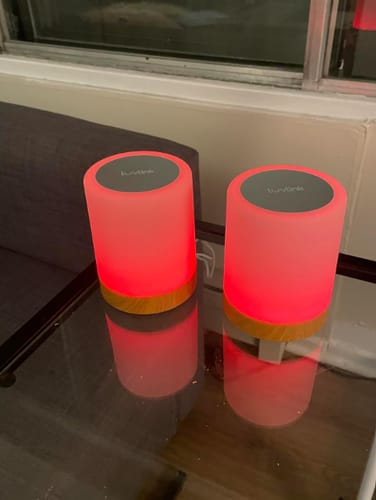
“I got these lamps for me and my boyfriend. The luvlink lamps provide a beautiful way to stay connected with loved ones, no matter the distance. With just a touch, they illuminate, sending a warm glow to your special someone's lamp, creating an instant connection and a reminder of your bond. Easy to set up and use, they add a touch of magic to any relationship, making them a thoughtful and heartfelt gift for anyone longing to stay close to those they cherish, even from afar. Can’t recommend this ...”
Frequently Asked Questions
What are the biggest green flags in a long-distance relationship?
The clearest green flags are: consistent, honest communication; a shared plan for closing the distance; the ability to handle disagreements without things unravelling; and both partners genuinely living their own lives — not just waiting. Feeling emotionally supported from afar, even on tough days, is one of the strongest signs a long-distance relationship is working.
How do you know if a long-distance relationship is worth continuing?
Ask yourself two things: do you have a realistic shared vision for the future, and does the relationship feel supportive and secure even during the hard stretches? If the answer to both is yes, the relationship is almost certainly worth continuing. If neither person can articulate a future together, that's the more pressing conversation to have.
How can couples stay connected between visits in a long-distance relationship?
Finding a communication rhythm that suits both people is key — voice notes, scheduled calls, and even co-watching TV shows from separate locations all help. Physical tools like the Friendship Lamp are popular with UK couples because a simple touch sends a real, visible signal to your partner's home — no screen, no words, just light. Small, consistent gestures add up to a lot over weeks and months apart.
Is it normal for long-distance relationships to feel hard even when they're going well?
Completely normal. Missing someone you love is not a sign that the relationship is struggling — it's actually evidence of how much it means to you. The distinction is between difficulty (which is expected and manageable) and hopelessness (which is worth paying attention to). Most couples in healthy LDRs report that the distance is genuinely hard and that they wouldn't give up the relationship for anything.


