

A British Parent's Guide to Staying Connected When Your Child Moves Away
It's the Sunday night after freshers' weekend, and the house is so quiet you can hear the boiler. Their bedroom door is open — you can see the gap where the posters used to be — and you don't quite know what to do with yourself. That feeling is very common for UK parents, and it doesn't really get easier just because everyone told you it would.
Quick answer: The most effective ways to stay emotionally connected when your child moves away are building low-pressure routines, choosing the right tools for passive and active touch points, and resisting the urge to flood them with messages. Most parents find that a standing Sunday call — even a slightly awkward 15-minute one — does more than three spontaneous texts that go unanswered.
One day their bedroom is loud and full of clutter. The next, it's quiet in a way that sits in your chest. Whether your child has just headed off to university in Manchester, taken a flat in London, or moved abroad entirely, the shift is real — and so is the ache. This guide won't tell you to "embrace the change" and leave it at that. It will give you genuinely useful, practical ways to stay close without smothering, and connected without being clingy.

Why Staying Connected With Your Child After They Move Away Is Harder Than It Looks
You'd think it would be easy. Everyone has a smartphone. Video calls are free. And yet, weeks can slip by with nothing more than a few WhatsApp voice notes and the odd "like" on an Instagram story. That's not distance failing you — it's a lack of intentional connection.
Around 2.3 million students are enrolled at UK universities at any given time, and the vast majority live away from home — many for the first time. Research from the British Psychological Society suggests that consistent, low-pressure contact matters far more for relationship quality than the occasional big conversation. Adult children, especially students in freshers' week or young professionals finding their feet, are spinning a dozen plates. They love you. They're just distracted. The parents who manage to stay genuinely close are the ones who build connection into the everyday rather than waiting for it to happen organically.
There's also a subtle pressure dynamic at play. Ring too often and you risk becoming the parent they feel guilty about not calling back. Go quiet and the gap quietly widens. The sweet spot is showing up in small, warm ways that don't demand anything back — present without being persistent.
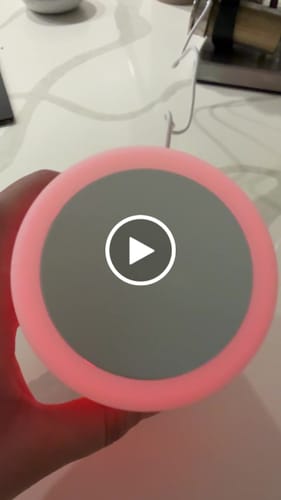
“My mom lives in another state, and I wanted to gift her something meaningful. The lamp helps us communicate hundreds of miles away with just a simple touch. She loves when I send her a pink “I love you” or blue “I miss you”. The product is sturdy and was easy to set up. Worth the money!”
Build Routines That Don't Require Much Effort From Either Side
The most durable connections are built on low-stakes habits. A weekly Sunday call at a time that suits them (not you — that part matters). A shared playlist you both add songs to. A photo sent every Friday with no expectation of a reply. These micro-rituals accumulate into something genuinely meaningful.
Some ideas that UK families actually use:
- A standing video call slot — even 20 minutes, same time every week, takes the negotiation out of it.
- A shared notes document where you both drop interesting things you've read, watched, or noticed. Completely async, no pressure.
- Sending a care package once a term — nothing elaborate, just their favourite biscuits and a handwritten note. The physical nature of it lands differently than a text.
- Watching the same series and texting reactions. You're not in the same room, but you're having the same experience at roughly the same time.
- A family group chat with ground rules — memes and funny news only, no guilt-tripping. Keep it light and they'll actually check it.

One tool that fits neatly into that low-pressure, no-reply-needed category is the LuvLink Friendship Lamp — and it's worth understanding how it works before dismissing it as a gimmick.
How Does the Friendship Lamp Work for Families?
It's beautifully simple: you touch your lamp, theirs lights up in the same colour — instantly, wherever they are in the world. No message to write, no call to schedule. Just a quiet signal that says I'm thinking of you.

The LuvLink Friendship Lamp connects over Wi-Fi, and you can choose from over 200 colours — so a tap in green might mean "good morning," while yellow could be "thinking of you." Families develop their own little colour language over time, which is part of what makes it feel so personal.
For a parent sitting quietly after dinner, wondering how their child's day went, a single touch is enough. And when that lamp in your child's student flat glows softly, they know someone at home is thinking of them — without needing to drop everything to respond. It removes the pressure that a call or text can sometimes create, and replaces it with warmth. If you want to understand the full setup process, this guide walks through exactly how the Friendship Lamp works.
Friendship Lamp Sets: Which Option Fits Your Family?
The Friendship Lamp comes in several configurations, so you can include as many people as you need — handy if you have more than one child who's flown the nest, or if grandparents want to be part of the loop too.
| Set Option | Best For |
|---|---|
| Single Lamp | Adding to an existing set you already own |
| Set of Two | One parent (or couple) and one child — the classic pairing |
| Set of Three | Two parents and one child, or one parent and two children |
| Set of Four | Families with two or three children who've moved out |
| Set of Five | Larger families or including grandparents in the network |
| Set of Six | Extended family networks — everyone gets a lamp |
If you've got one child at university and want to keep it simple, a Set of Two is the natural starting point. You can always add a Single Lamp later if another sibling moves out or grandparents want to join in. Real families have shared how these small daily signals change the emotional texture of being apart — read some of their stories here.

What Not to Do (Yes, This Part Matters)
Staying connected isn't just about what you do — it's about what you don't do. A few patterns tend to backfire:
- Calling too frequently. If they feel obligated to answer rather than genuinely wanting to, the call becomes a chore. Once or twice a week works well for most families — but honestly, follow their lead more than any rule of thumb.
- Leading with worry. "Are you eating properly? You look tired. Are you sleeping?" is loving, but it can feel like an audit. Lead with curiosity instead: "What's been the best bit of your week?" You'll get a real answer far more often.
- If you find yourself typing "haven't heard from you in a while" at 11pm, close the app. That message rarely lands the way you intend it to — it signals that their independence comes at a cost to you, and they'll feel it. A lamp tap, a meme in the group chat, or simply waiting until morning will serve you both better.
The goal isn't to recreate life under the same roof. It's to build a new kind of relationship — one between adults who genuinely enjoy each other's company.
When Your Child Has Moved Further Afield
Some children don't just move to the next city — they move abroad. Perhaps it's a graduate job in Berlin, a working holiday in Australia, or a partner in Canada. The time difference adds another layer, and the distance feels sharper.
If your child has moved abroad from the UK, this guide to gifts for someone moving abroad has thoughtful ideas that bridge the gap practically. The Friendship Lamp works just as well across time zones — that's actually one of its best qualities. A glow in the night doesn't require anyone to be awake and ready to talk.
For students specifically, this roundup of long-distance gifts for university students covers a range of options worth considering alongside the lamp.
Helping Your Child Stay Connected Too
Connection is a two-way street, and part of your role is helping your child feel safe enough to reach out when they need to — not just when they're having a great week. Let them know explicitly that they can call when things are hard, not just to share good news. Some young adults hold back because they don't want to worry their parents.
It also helps to stay interested in their world rather than pulling them back into yours. Ask about their flatmates, their course, their local pub quiz. Show genuine curiosity about the life they're building, and they'll naturally bring you into it more.
The parents who stay closest are the ones who make their child's new life feel celebrated, not threatened.

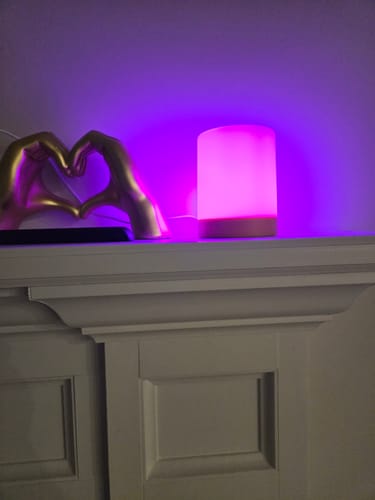
“I absolutely love it and so does the family. We just recently put them up because I had to send them to my children first. My oldest daughter told me that my grandson-who is 6- says to my daughter "Oma ( German word for grandma)and them are showing us love, or uncle JJ and them are showing us love" whenever she is not there to see it. It's so cute ☺️. We are all in love with the lamps. Soon I am going to see my parents in Germany and I will give one to my parents. I can't wait 🤗”
Frequently Asked Questions
How often should I contact my child after they move away?
There's no universal answer, but one or two proper catch-ups a week tends to be the rhythm most families naturally settle into. What matters more than frequency is predictability — a call your child expects and has agreed to feels very different from one that arrives out of nowhere. Day-to-day, something passive like the Friendship Lamp can keep a thread of warmth going without anyone having to carve out time. And if you miss a week? Don't make it A Whole Thing. Just pick it back up.
Is the Friendship Lamp suitable for parents and adult children, not just couples?
Absolutely. The lamp is used by all kinds of people — couples, best friends, siblings, and families. Many UK parents use it with children who've moved to university or abroad. It's particularly lovely for moments when you want to say "I'm here" without interrupting their day with a call.
What if my child isn't very communicative by nature?
Some adult children simply aren't big texters or callers, and that's genuinely fine — it's not a measure of how much they care. One thing that works well for quieter personalities is agreeing on a standing emoji check-in: something as simple as a thumbs-up on Sunday evening to say "I'm good, week was fine." It's low enough effort that it actually happens, and it gives you something concrete rather than silence. Passive tools like the Friendship Lamp slot in alongside this nicely — a colour appearing on a lamp requires nothing back, which means it rarely feels like a burden.
Can the Friendship Lamp work across different countries?
Yes — it connects via Wi-Fi, so it works anywhere in the world with a Wi-Fi connection. Time zones don't matter either; a tap simply lights the other lamp, whether it's noon or midnight wherever they are.


